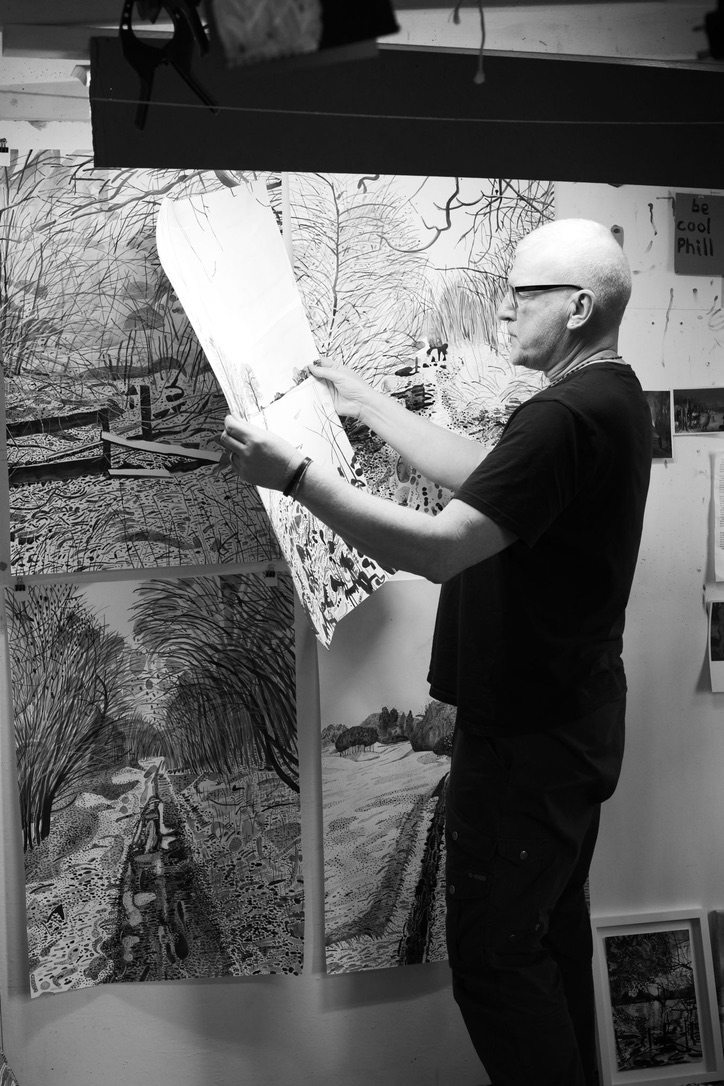
Phill Hopkins (b.1961) grew up in Bristol. He studied art, firstly in Bristol and then at Goldsmiths’ College, London, graduating with a BA in Fine Art in 1985.
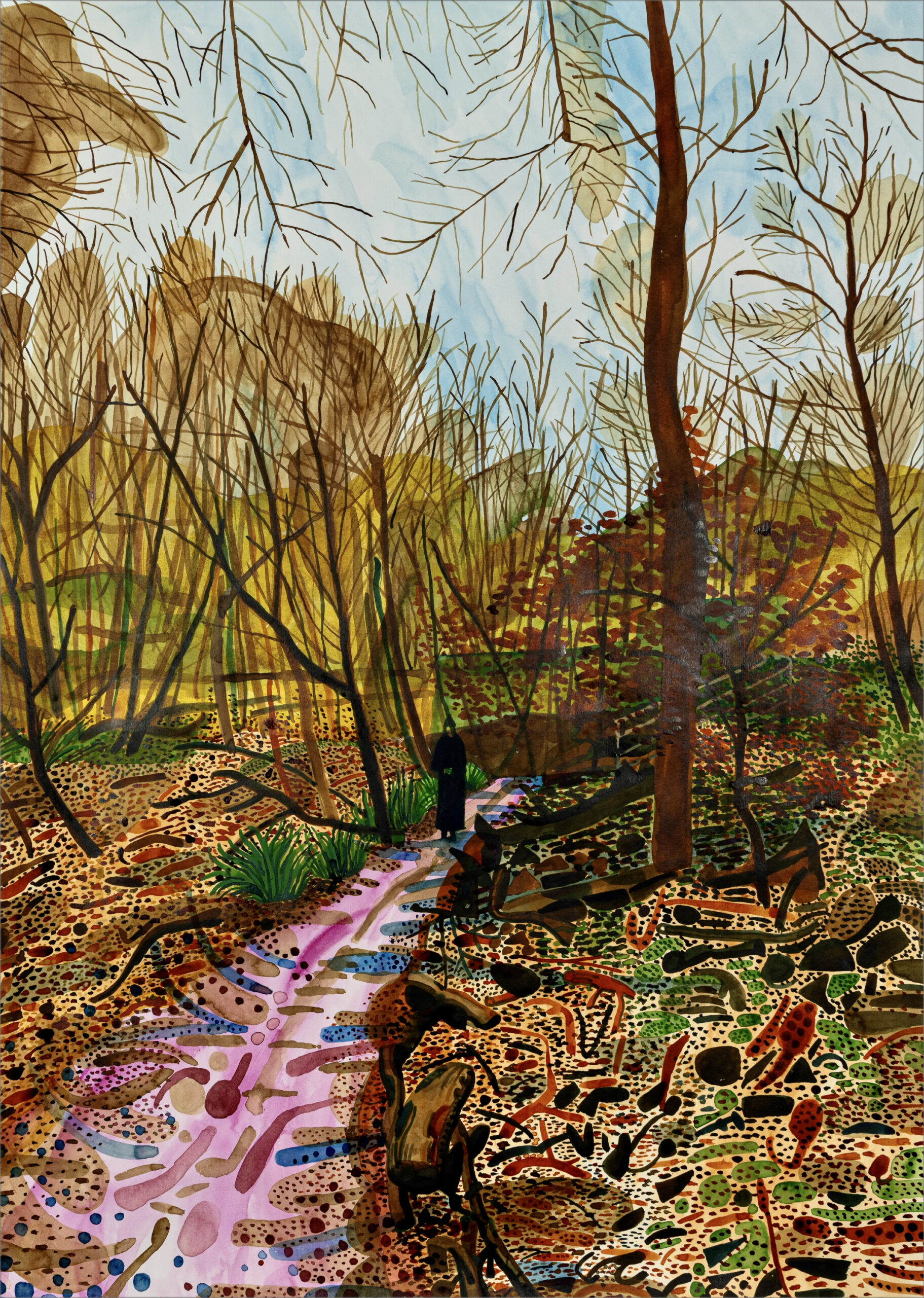
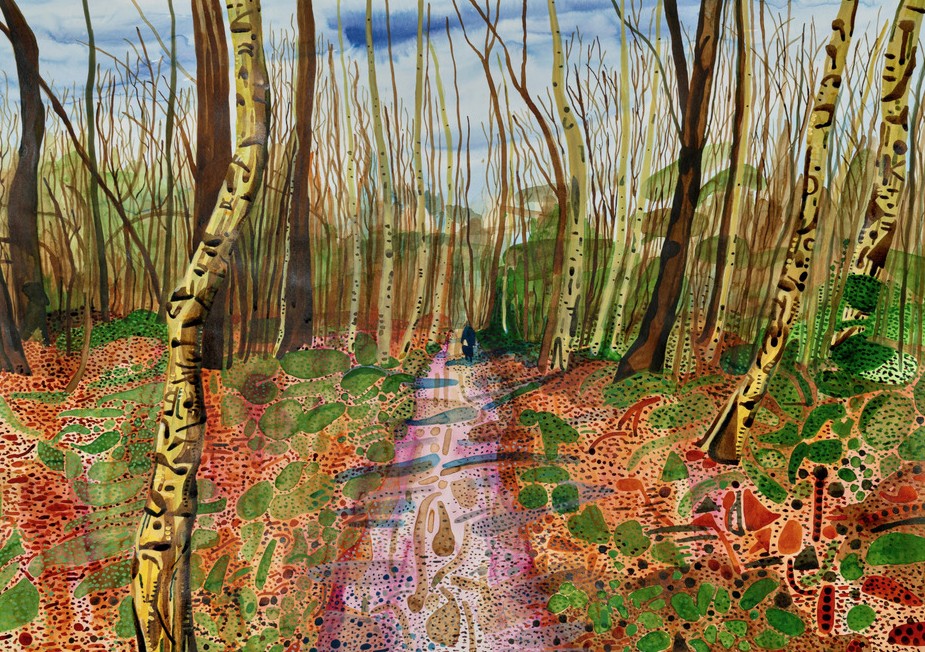
He is a painter and draughtsman whose practice is rooted in walking and observation. Phill’s daily walks through local woods, riverbanks, fields and urban edges are his foundation and a method of attunement, allowing perception to unfold slowly and bodily rather than pictorially.
Landscape, in his work, is something entered, navigated and inhabited rather than observed at a distance.
The landscape steadies me. Stepping into it loosens the tightness of thought and draws me into wind, light and distance. The land becomes a quiet mirror, returning fragments of myself in shifting patterns and subtle echoes. In its presence, I feel the tug of memory — the person I was, the ancestry beneath my feet, the long thread of belonging. Here, perspective softens, and my body remembers itself.
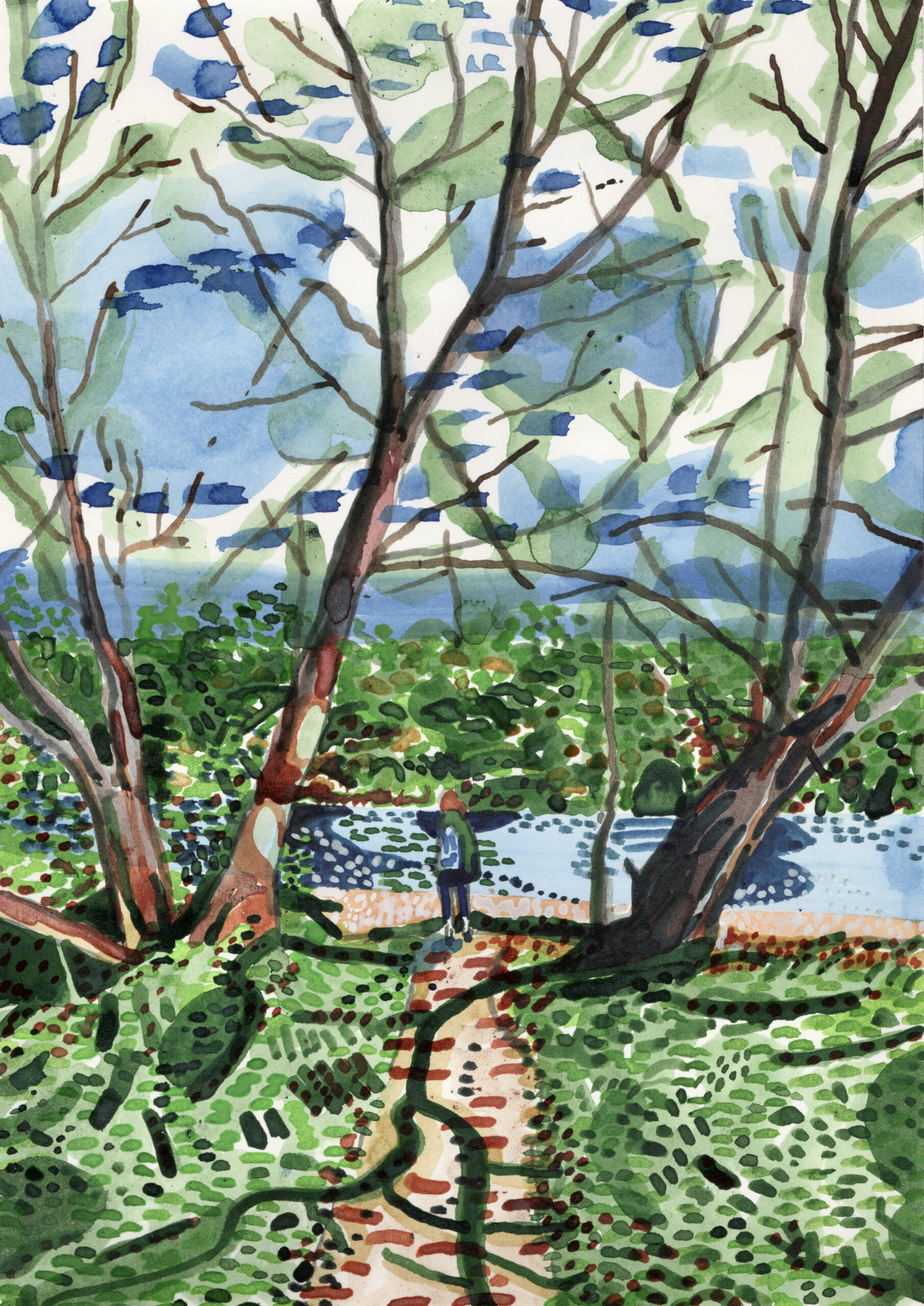
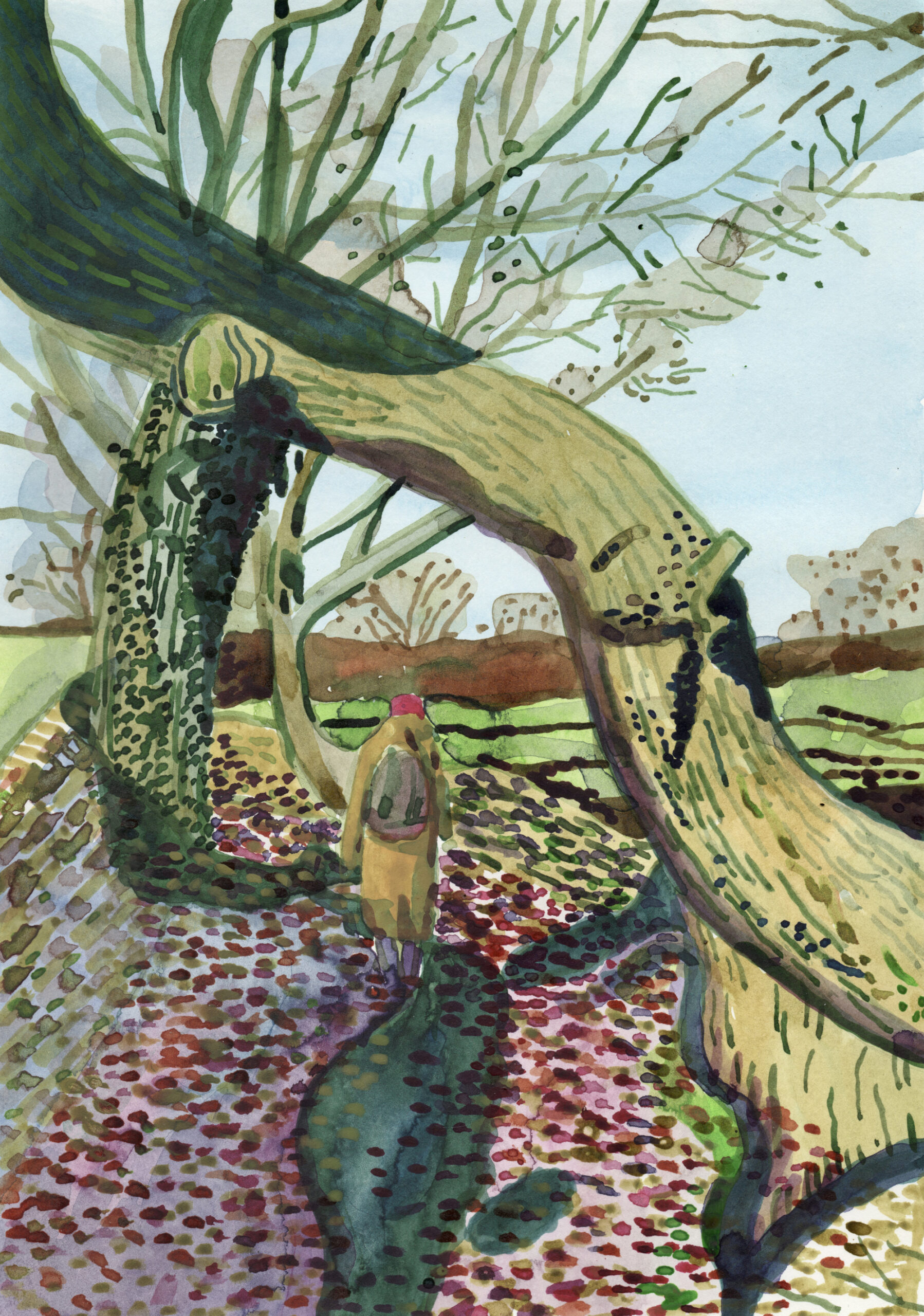
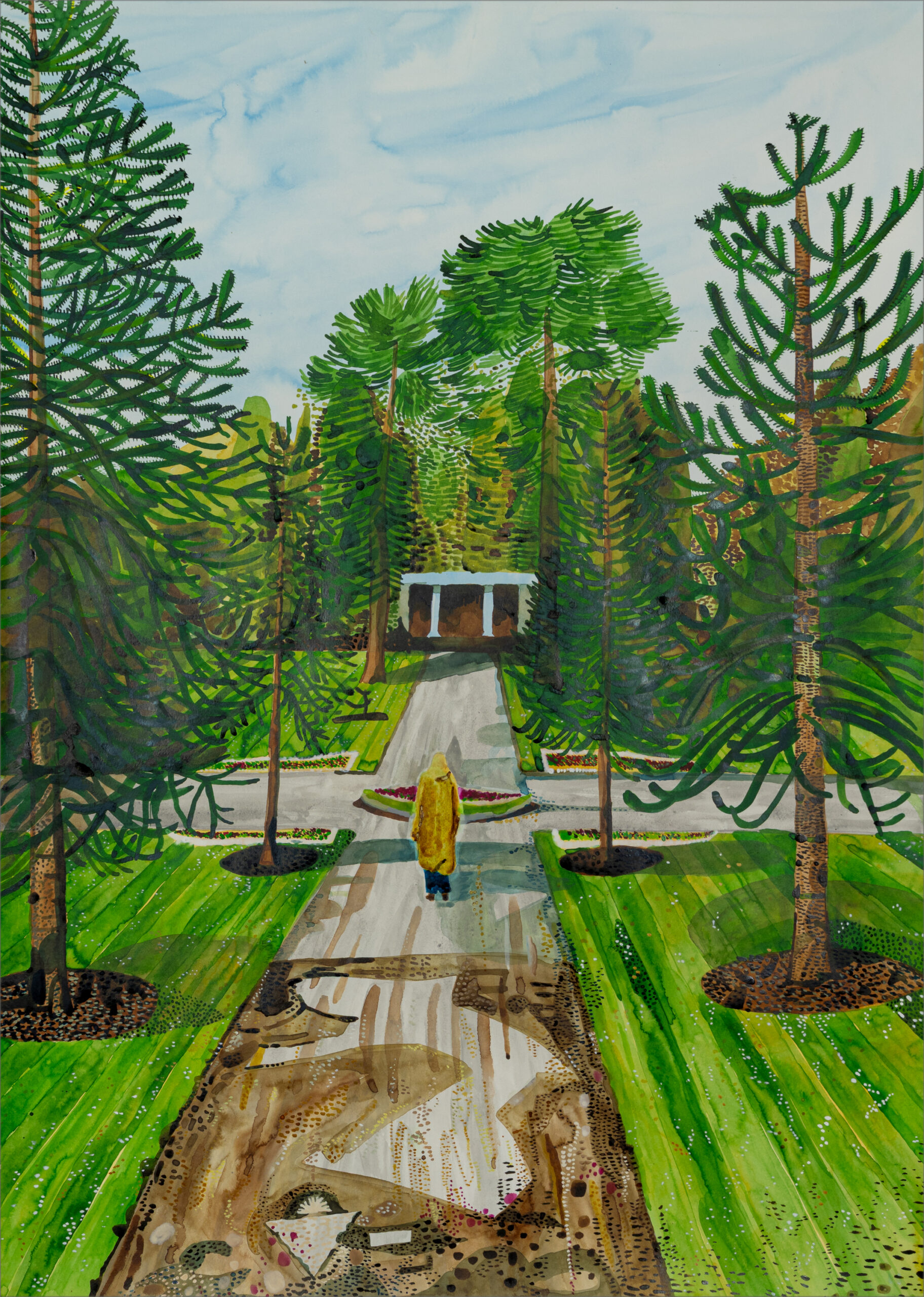
I am, at heart, a mark maker. My marks are a private language, a kind of intuitive prose. They arrive both sudden and deliberate, carried by attention, shaped by instinct. I mark the surface so it murmurs, vibrates, resonates. Each gesture translates experience: a decoding, a revealing, a reaching toward what is seen, half-seen, or imagined beneath the skin of things. Though the marks seek independence, they drift under the mind’s gentle ordering.
Colour, too, transforms. It rarely mirrors the visible world; instead it wanders in from elsewhere, shifting the familiar into the strangely luminous. Through this drift, the landscape becomes half-known, half-mysterious.
Drawing and painting grow from walking, noticing, lingering. A lone figure often appears — a silhouette of belonging — inviting pause, reflection, connection, and balance.
Phill works from his home studio on the outskirts of Leeds and has exhibited widely in the UK and internationally. Solo exhibitions include Leeds Art Gallery, 108 Fine Art in Harrogate, and Galeria Fernando Santos in Porto.
His work has featured in group exhibitions at institutions such as the Imperial War Museum North, the Henry Moore Institute, Kettle’s Yard, the ICA London and Whitworth Art Gallery and is held in significant public collections, including Leeds Art Gallery, the Henry Moore Centre for the Study of Sculpture and the Imperial War Museum.
Internationally, collections can be found in Germany, Hungary and China.
(Studio Image: Pete Harley)